
Kango
DoLightful, IncParenting
3.960.00 Reviews
- Version
- Varies With Device
- Installs
- 10.00K
- Age Rating
- Everyone
Screenshots

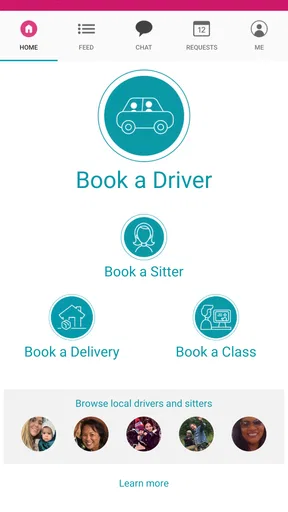
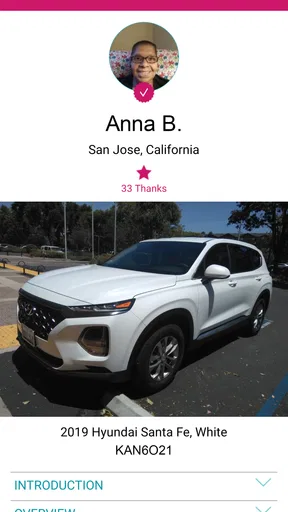
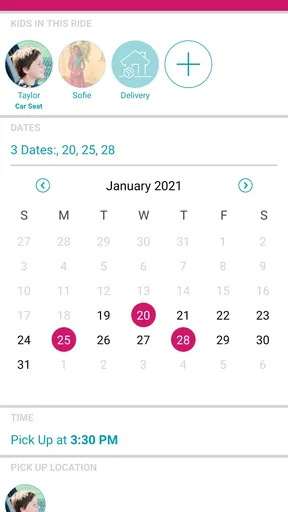
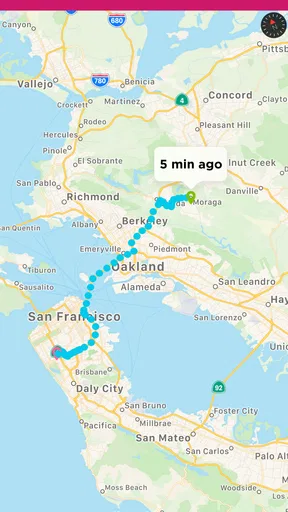
Our Review of Kango
 Analysis by Appyee
Getting children where they need to go is often less about distance and more about timing. A school pickup can collide with a work call, an after-school activity can end earlier than expected, and a shared family calendar can become difficult to manage when several adults are involved. Kango is a parenting app from DoLightful, Inc that brings rides, childcare, and carpools into one place. I found its main appeal in that combination: it is not limited to arranging transportation, but is designed around the practical gaps that appear in everyday family schedules.
The app is free, aimed at Everyone, and available for devices running OS 10 or later. It has an average rating of 3.9 from around 142 ratings, with 10K+ installs. Those figures suggest a smaller community than the biggest transportation apps, so I would not approach it as a universal replacement for every local ride service. I would approach it as a focused tool for parents who need a more family-oriented way to coordinate rides and care.
How the everyday Kango workflow feels
The most useful way to think about Kango is as a planning layer between a child’s schedule and the adults responsible for making that schedule work. Instead of treating a ride as an isolated trip, I would use the app when the journey is connected to school, activities, childcare, or another recurring family obligation. That context makes it more relevant than simply opening a general ride-hailing app each time someone needs to travel.
A typical use case is easy to picture. I might have a child who needs to leave school, attend an activity, and then get home while I am still working. In that situation, I can use Kango to organize the ride or childcare need rather than relying on a last-minute message to another parent. The value is not just the individual booking; it is having one place to think through the handoff and reduce the number of separate conversations.
I especially like the idea of using the app before the busy part of the day begins. A rushed request made while a child is already waiting is more stressful than arranging the need earlier. My practical habit would be to review the next day’s school and activity commitments, identify the points where I cannot personally be present, and then use Kango for those specific gaps. That makes the app part of a repeatable routine instead of an emergency button.
The carpool angle is also important. Families often already have informal arrangements, but those arrangements can become confusing when several children, destinations, and pickup times are involved. Kango gives that kind of planning a dedicated home. It may not eliminate every message or calendar entry, but it can make the transportation problem easier to frame: who needs a ride, when it is needed, and whether the request belongs to a ride, childcare need, or shared arrangement.
For a parent considering the app, the first question is whether the service fits the family’s actual routine. If your children rarely need transportation without you, Kango may feel unnecessary. If school, activities, and work regularly pull your schedule in different directions, the app becomes much more relevant. Its usefulness grows with the number of recurring handoffs you need to organize.
Starting with a reliable baseline routine
I would begin by keeping the first few arrangements simple. Choose one familiar route or one recurring activity rather than trying to coordinate every weekly obligation immediately. This gives you a chance to understand how the app fits into your planning style and whether the available ride or childcare options suit your family.
A good baseline workflow has three stages. First, identify the exact gap in your schedule. “I need help after school” is less useful than “I need coverage between school dismissal and the start of soccer.” Second, decide whether the need is transportation, supervision, or both. Third, arrange it early enough that you still have time to adjust if the plan does not fit.
This distinction matters because transportation and childcare are not interchangeable. A ride may solve the problem of getting a child from one place to another, but it may not cover the time before an activity begins. Conversely, childcare may be more appropriate when the child needs supervision rather than movement. Kango’s combined focus encourages me to consider the whole transition instead of treating the car journey as the entire solution.
I would also keep a backup plan for important days. That is not a criticism unique to Kango; any service involving schedules and other people can be affected by changes. For a normal afternoon, a backup might be another parent or a family member. For a critical appointment, I would not rely on a single arrangement without checking the timing carefully.
Settings and details worth checking first
Before using the app for a high-pressure situation, I would spend time reviewing the account and request details that affect how a ride or childcare arrangement is understood. The practical goal is to make every request clear enough that another person does not have to guess about the child, timing, location, or destination.
Addresses deserve particular attention. A school may have several entrances, and an activity center may use a side entrance rather than its main street address. When a pickup depends on a precise handoff, I would check the location information instead of assuming the default map point is ideal. This is one of those small habits that can prevent a great deal of avoidable confusion.
I would also check the child-related information used in the arrangement and make sure it is current. Parents often manage more than one child, and a request that is obvious in their own head may not be obvious to the person handling it. Keeping names, ages, and relevant notes organized can make repeated bookings quicker and reduce the chance of selecting the wrong details.
Timing should be treated as a window rather than a single isolated minute. School dismissal, walking to a pickup point, and settling into a vehicle all take time. I would avoid creating a plan that assumes a child can appear instantly at the curb. A little breathing room is especially useful when the child is moving between school, an activity, and a ride.
Notifications and phone behavior are worth checking as well. A family transportation app is only helpful if I notice updates when they matter. I would make sure the device can alert me about changes and would avoid silencing the app during the period when a pickup is active. This is a basic setting, but it is easy to overlook when the phone is already crowded with school and work notifications.
Privacy is another reason to be deliberate. Because the app concerns children, rides, and childcare, I would share only the information needed to make the arrangement work and would review each request before confirming it. The convenience of storing details should not replace ordinary parental judgment about what information is appropriate for a particular situation.
Faster patterns for families who use it often
Once the basic workflow feels comfortable, the biggest speed improvement comes from standardizing recurring situations. I would create a small personal vocabulary for the week: school pickup, activity transfer, occasional childcare, and carpool support. Even if I still need to enter details each time, thinking in these repeatable categories makes it faster to decide what kind of help I need.
Another useful habit is to plan several related needs together. If a child has the same activity on multiple days, I would review the full week before making individual arrangements. This helps expose conflicts that are easy to miss when each ride is considered separately. It also makes it easier to spot the one day when I can handle the pickup myself and the other days when I need support.
For carpools, I would agree on the pattern outside the app before trying to make it routine. Parents should know which children are traveling, which destinations are involved, and what happens if the activity ends early. Kango can support the transportation part, but it cannot replace a clear agreement between the adults. The more settled the arrangement is beforehand, the less time I spend resolving basic questions inside the app.
I would also use a short review after each arrangement. Was the pickup point practical? Was the timing comfortable? Did the child know what to expect? Did I receive information at the right moment? These observations can improve the next request. This is a more valuable use of the app than simply repeating the same booking without learning from the first one.
A less obvious trade-off is that convenience can encourage overbooking. When arranging help becomes easier, it is tempting to use the service for every small inconvenience. I think Kango works best when I reserve it for genuine schedule conflicts or situations where a coordinated carpool or childcare arrangement adds real value. Keeping some flexibility in the family routine prevents the app from becoming another source of unnecessary commitments.
Where Kango is stronger than ordinary alternatives
The usual alternative is a general ride-hailing app. Those services can be useful for adult transportation, but they are not necessarily designed around school pickups, childcare transitions, or parent-to-parent coordination. Kango’s focus makes it easier for me to start with the family problem rather than forcing the family problem into a standard passenger trip.
Another alternative is a group chat. Messaging is familiar and flexible, and many parents already use it for carpools. The weakness is that important details can disappear among unrelated conversation. A chat may contain the address, a changed time, a question about supervision, and a last-minute cancellation in different places. Kango is more structured for the transportation and care request itself, while the group chat can remain useful for discussion.
Shared calendars are helpful for visibility but do not solve every handoff. A calendar can show that an activity exists, yet it may not arrange the ride or childcare needed to attend it. I see Kango as complementary to a calendar rather than a replacement. The calendar tells me what the family must do; the app helps address how a child gets through the difficult part of the schedule.
Informal help from relatives or trusted neighbors may still be the better choice in some families. Personal relationships can offer more familiarity and flexibility, particularly for children who need a consistent caregiver. Kango is most useful when those informal options are unavailable, difficult to coordinate, or insufficient for the number of weekly transitions involved.
Limits I would take seriously
The 3.9 average rating indicates a mixed rather than flawless experience, and I think that is a fair reason to test the app gradually. A service that depends on local availability and coordinated human help can feel excellent in one family’s routine and less useful in another. I would not assume that the app’s presence on my phone automatically means every ride or childcare need can be solved.
The community size also matters. With 10K+ installs, Kango is a focused service rather than a platform I would expect to have the same reach as a mainstream transportation app. This can affect how confidently I plan around it, especially for unusual routes, late requests, or times when many families need help at once. I would check practical availability before building an important day around the service.
Parents who want instant, on-demand transportation may find the family-planning approach less convenient than a general ride app. Kango suits deliberate coordination better than spontaneous travel. If I need a ride for myself across town, I would choose a conventional transportation option. If I need to solve a child’s school-to-activity transition, Kango is the more relevant place to look.
I would also avoid treating the app as a substitute for verifying a child’s handoff. A booking can organize the plan, but I still want to know where the child will wait, who is expected to receive them, and what the fallback is if the schedule changes. The more important the trip, the more I would confirm those details directly rather than assuming the digital arrangement covers every practical step.
Device compatibility is another simple consideration. Since the app requires OS 10 or later, I would check the family’s phones before depending on it. That is particularly important in households where a parent uses an older device or where more than one adult needs access to the same planning process.
Who should use it, and who should skip it?
I would recommend Kango to parents with recurring transportation gaps, families managing several children’s activities, and households interested in organized carpools or childcare support. It is especially promising when the challenge is not finding a vehicle, but coordinating a child’s movement and supervision around adult responsibilities.
I would be more cautious for families with very occasional needs, children who always travel with a parent, or schedules that change too unpredictably to plan. Those users may get more value from a trusted relative, a school-specific arrangement, a shared calendar, or a general ride service used only when necessary.
It is also not the right choice if a parent expects the app to make every safety and scheduling decision automatically. My experience with this kind of tool is that the best results come from an involved adult who checks the details, communicates clearly, and treats the app as coordination support rather than a replacement for judgment.
My verdict after building a repeatable habit
Kango is a practical parenting app with a clear purpose: helping families organize rides, childcare, and carpools when ordinary schedules stop fitting together. I like that its focus is broader than transportation alone, because a child’s journey often includes waiting, supervision, and handoffs that a basic ride request does not address.
My preferred approach would be to start with one familiar recurring need, check the location and timing carefully, confirm the child-related details, and then expand only after the routine feels dependable. Reviewing notifications and keeping a backup plan are small steps, but they make the experience much less stressful. For frequent users, weekly planning and consistent request categories can turn the app into a useful part of family logistics.
There are real limits. Local reach may not match larger transportation platforms, the experience will not suit parents seeking instant adult rides, and the mixed rating suggests that expectations should remain realistic. Still, for the right household, Kango is most valuable as a structured bridge between a child’s schedule and a parent’s available time. I would try it if school pickups, activities, or carpools regularly create conflicts, while keeping a trusted human backup for the moments that matter most.
As a free parenting app from DoLightful, Inc, it is easy to consider without adding a purchase decision to the process. Its Everyone age rating also makes it broadly accessible as an app for families, though the responsibility for arranging and supervising a child’s care remains with the adults using it. In my view, it is worth testing carefully when the family problem is coordination—not simply finding a ride.
Verdict
Strengths of Kango
- Simple interface makes core features easy to find.
- Useful for staying connected with local community members.
- Supports quick communication without complicated setup.
- Convenient for sharing updates, requests, or nearby information.
- Lightweight design should work well on many Android and iOS devices.
Limitations of Kango
- Some features may depend on having an active local user base.
- Notifications can become distracting if many updates are posted.
- Privacy settings may require careful review before sharing information.
- The app’s usefulness can vary significantly by location.
- Occasional bugs or slow loading may affect the overall experience.
Similar Picks in This Category
View All
Family Space
Motorola Mobility LLC.3.9

شرطة الأطفال - مكالمة وهمية
Oub Apps4.1

Findmykids: Parental Control
LETEM LTD4.6

Pregnancy + | Tracker App
Philips Electronics UK Limited4.8

Policía de niños - para padres
Kids police4.7

Pregnancy App
Amila4.9
Frequently Asked Questions
What is Kango, and what can I use it for?
Kango is a mobile application designed to help users access its core services and features from an Android or iOS device. Depending on the version and region, it may provide tools for communication, organization, content, or service management. Before downloading, check the official store description to confirm the app’s current purpose, supported features, and availability in your country.
Is Kango free to download and use?
Kango may be available as a free download, but some features or services could require in-app purchases, a subscription, or separate payment. Pricing can also vary according to your location, account type, and the functions you choose to use. Review the app-store listing and payment terms carefully before registering, especially if automatic renewal is included.
What devices and operating systems are compatible with Kango?
Compatibility depends on the version of Kango available through the Google Play Store or Apple App Store. You should check the listed minimum Android or iOS requirements before installing, as older phones and tablets may not support the latest release. Sufficient storage, an active internet connection, and updated system software may also be necessary for reliable performance.
Does Kango require an account or personal information?
Kango may require users to create an account to access personalized features, save information, communicate with others, or synchronize activity across devices. During registration, the app could request details such as an email address, phone number, name, or location. Read its privacy policy before signing up to understand how data is collected, stored, shared, and deleted.
Is Kango safe for children and suitable for everyday use?
Suitability depends on the specific features, content, and communication options included in the current Kango version. Parents should review the app’s age rating, permissions, privacy settings, and any user-generated content before allowing a child to use it. For everyday use, also consider battery consumption, notifications, data usage, and whether the app provides appropriate account and safety controls.
